
A Coastal Gardener’s Guide to Growing Blueberries.
As I walk around our wild and overgrown two acres of land, I’m constantly dreaming of a landscape that’s beneficial not only for myself and my family—but for the land itself. The idea of wandering through our yard and stumbling upon fresh berries, fruit, and vegetables is so enticing. The thought that these plants could feed us and support wildlife makes the dream even better.
Coastal Living and Hardiness Zones
We live just off the coast of Southern Washington, in USDA Hardiness Zone 9a, where the coldest temperatures range average from 20–25°F. That gives us a wide variety of planting options—basically anything rated for Zone 9a or lower.
Our last frost typically hits around mid-April, and our first frost usually arrives by early November. We experience a cool-summer Mediterranean climate (Csb) with few days above 86°F. That means gardening here is mild and green—as long as you don’t mind a bit of rain!
Rainfall & Seasons:
- Annual rainfall: 80–90 inches per year
- Wet season: October–April (peak rain: Dec–Jan)
- Dry season: June–early September (though fog and marine mist are common)
Want a full guide to planting in this climate? Check out my upcoming post: “Growing in the Csb Zone: A Guide for Coastal Gardeners” (link soon).
The Blueberry Deep Dive
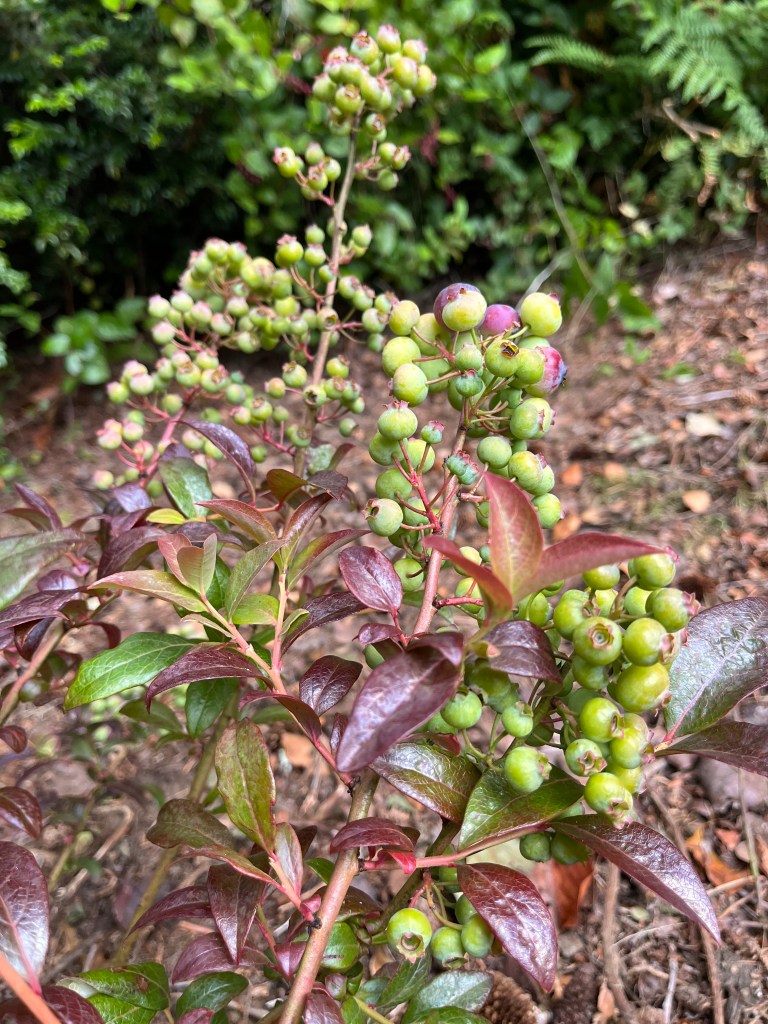
Let’s start with the basics. Blueberries belong to the genus Vaccinium and are native across North America, especially the eastern U.S. They prefer acidic, well-drained soil and have shallow fibrous roots, so they dislike standing water. Most varieties are self-fertile, but cross-pollination increases both yield and berry size—which makes choosing a mix of varieties especially important.
They’re also in the same plant family as cranberries, azaleas, and rhododendrons—which, conveniently, make excellent companion plants!
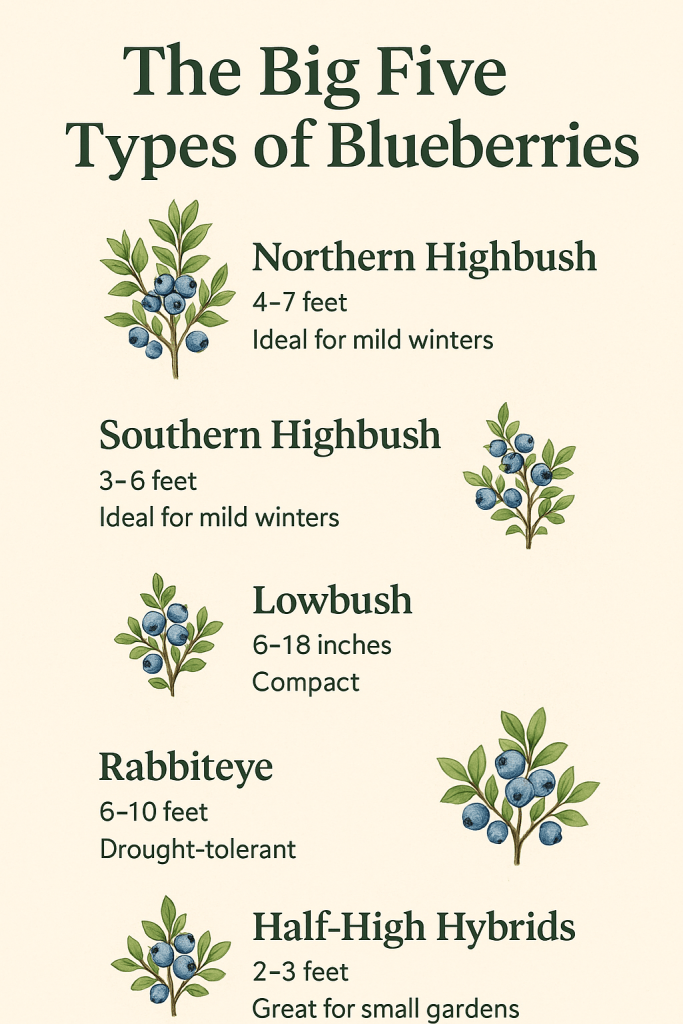
🌿 The Big Five Types of Blueberries
There are five major types of blueberry bushes, each cultivated for different climates and conditions:
1. Northern Highbush (Vaccinium corymbosum)
- Best for Zones 4–7 and coastal Zones 8–9a
- Requires 800–1,000+ chill hours
- Grows 4–7 feet tall
- Examples: ‘Bluecrop’, ‘Duke’, ‘Legacy’, ‘Elliot’, ‘Razz’
2. Southern Highbush (Hybrid of V. corymbosum and V. darrowii)
- Grows in Zones 7–10 with 150–600 chill hours
- Ideal for mild winters
- Grows 3–6 feet tall
3. Lowbush (Vaccinium angustifolium)
- Native to the Northeast U.S. and Canada
- Requires cold winters (Zones 3–5)
- Compact: 6–18 inches tall
- Very flavorful, small berries
4. Rabbiteye (Vaccinium virgatum)
- Best for hot, humid southern climates (Zones 7–9)
- Drought-tolerant, but dislikes wet/cool conditions
- Needs 300–700 chill hours
- Grows 6–10 feet tall
5. Half-High Hybrids
- Cross of Northern Highbush and Lowbush
- Zone 3–4 hardy
- Great for small gardens or container growing
- Grow 2–3 feet tall
Berry Seasonality: Why Variety Matters
Blueberries don’t all fruit at once. Instead, different varieties bloom and ripen across early, mid, late, and very late parts of the season.
Bloom time ranges from March to May, and berries take 45–90 days to ripen after blooming depending on the variety and weather.
To enjoy berries for 3–4 months instead of just a few weeks, you need a mix of varieties that span all four timelines.
📌 Pro tip: Make sure at least two varieties bloom at the same time for better pollination and larger fruit.
🌸 Blueberry Bloom & Harvest Timeline

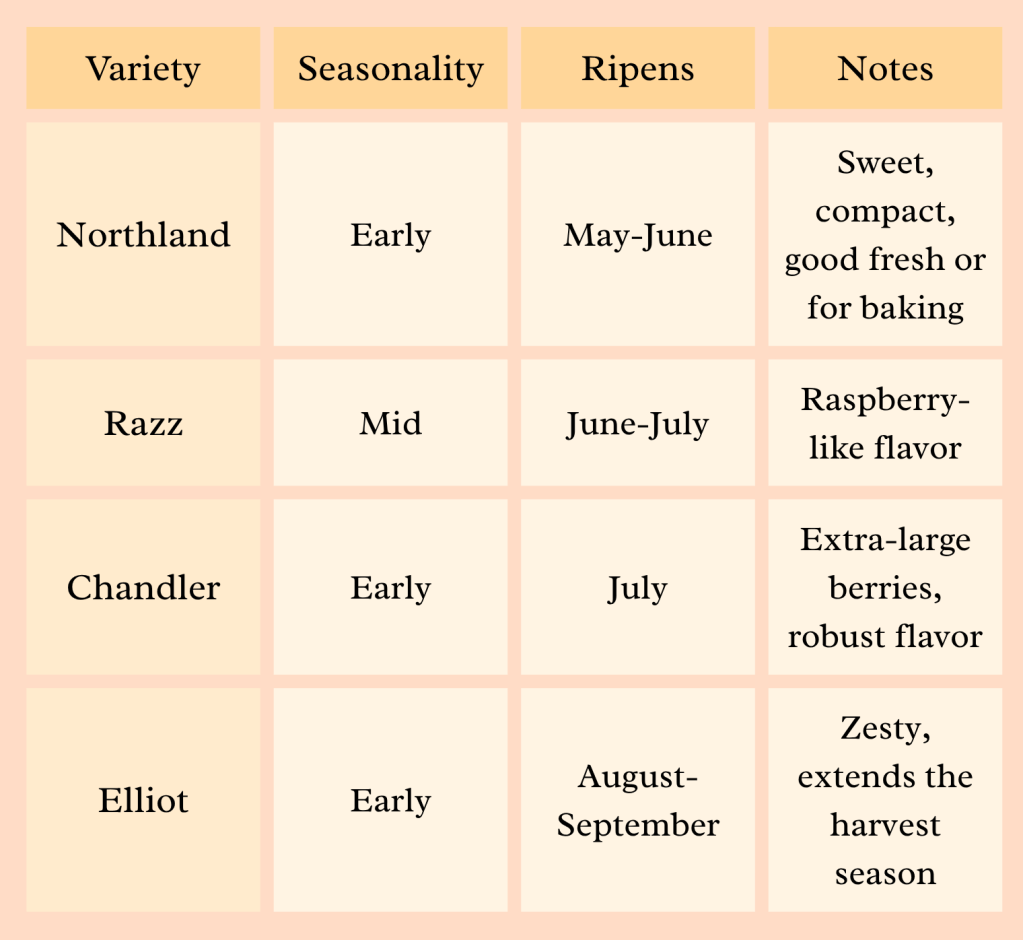
🌱 Meet Our Blueberry Varieties
Given our climate and USDA Zone 9a location, we chose all Northern Highbush varieties. Here’s our lineup:
🌿 Tips for Blueberry Planting Success
☀️ Location Matters
Blueberries need full sun (6–8 hrs/day) and excellent drainage. Avoid low-lying, boggy areas.
🌱 How to Plant
- Dig a wide, shallow hole—twice the pot’s width
- Keep the top of the root ball just above soil level
- Allow 4–5 feet between plants to prevent crowding
🌡 Acidic Soil Is Key
- Target soil pH: 4.5–5.5
- Natural acidifiers:
- Pine needles (mulch)
- Peat moss (mix 50/50 with native soil)
- Coffee grounds (small amounts)
- Pine needles (mulch)
Avoid:
- Lime, wood ash, manure, or standard compost (as they raise pH)
🌼 Fertilizers That Work
- Ammonium sulfate
- Cottonseed meal (organic)
- “Acid-loving plant” blends for azaleas/rhododendrons
🌺 Bring on the Companions
Plant with friends! These companion plants help boost pollination and productivity:
Native Shrubs & Groundcovers:
- Evergreen huckleberry – Native, edible berries, pollinator friendly
- Salal – Native evergreen groundcover, berries for wildlife
- Kinnikinnick – Native evergreen, wildlife friendly, erosion control
Pollinator Favorites:
- Lupine – tall in structure and help fix nitrogen
- Yarrow – pollinator magnet, and drought tolerant once established
- Penstemon – a hummingbird favorite
- Thyme – attracts bees, dry or use fresh in cooking
👉 Want a full list of companion plants for blueberries and huckleberries? Check out my upcoming guide: “The Best Companion Plants for Edible Shrubs in the PNW”.
Why It’s All Worth It
Once established, blueberries can live 15–20+ years—feeding both you and local wildlife. They thrive in the ground or in containers, and they’re incredibly nutrient-dense: full of antioxidants, vitamin C, and fiber.
And best of all? They’re incredibly versatile:
- Eaten fresh
- Baked into muffins or crisps
- Frozen, dried, or canned for year-round use
👉Looking for a great summer blueberry recipe, check out my: “ xxxx ”.
👉Cant get enough berries, check out my guide: “Designing a Native-Inspired Edible Garden in the PNW: Why Huckleberries Are a Must”.
🌿 Have you tried planting for a seasonal harvest? I’d love to hear what varieties you’re growing—drop your questions or favorites in the comments below!
 Timber & Tide
Leave a comment